
Oven and Refrigerator Deep Cleaning: What You Need to Know
Most people wipe down their kitchen counters daily and sweep the floors a few times a week, but the two hardest-working appliances in the kitchen, the oven and refrigerator, often go weeks or even months without a proper deep clean. At The Clean Haven, we specialize in helping homeowners reclaim clean, healthy spaces, and we see this pattern in kitchens everywhere. The result is not just an unsightly mess. It is a genuine risk to your food safety, your indoor air quality, and the lifespan of your appliances.
According to the USDA, harmful bacteria like Listeria and Salmonella can survive on refrigerator surfaces for days, sometimes longer, especially in the drip pan and door gaskets where moisture tends to collect. Your oven, on the other hand, bakes on layers of grease and food residue every time you cook, releasing smoke and potentially toxic fumes into the air you breathe. Understanding what is happening inside these appliances is the first step toward doing something about it.
Why Deep Cleaning Is Different From Regular Cleaning
Routine cleaning and deep cleaning are not the same thing. Wiping down a refrigerator shelf with a damp cloth removes surface debris, but it does not address the bacterial colonies forming in the crisper drawer seals or the odor-causing residue pooling at the bottom of the unit. Deep cleaning means removing every shelf, drawer, and compartment, sanitizing each component individually, and addressing the interior walls, coils, and gaskets that rarely get touched during a standard wipe-down.
The same principle applies to your oven. A quick wipe after spills helps, but it does not eliminate the carbonized grease that builds up along the oven floor, the hidden grime coating the interior glass, or the residue collecting around the heating element. Over time, this buildup reduces cooking efficiency and can even become a fire hazard.
How to Deep Clean Your Refrigerator the Right Way
Start by emptying the refrigerator completely. This is not optional. You cannot properly clean around items, and the process also gives you a valuable opportunity to check expiration dates and dispose of anything past its prime. Transfer perishables to a cooler while you work.
Remove every shelf, drawer, and bin. Wash these in warm, soapy water and allow them to dry fully before returning them. While the interior is bare, use a solution of one tablespoon of baking soda dissolved in one quart of warm water to wipe down every interior surface, including the walls, ceiling, and floor of the unit. Baking soda neutralizes odors without leaving behind a chemical residue that could transfer to your food.
Pay special attention to the door gaskets. These rubber seals trap moisture and crumbs and are one of the most commonly overlooked areas in any kitchen. Use a soft toothbrush dipped in your cleaning solution to work into the folds of the gasket. A damaged or dirty gasket also causes your refrigerator to work harder to maintain its temperature, which drives up your energy bill over time.
Do not forget the exterior coils, which are typically located at the back or underneath the unit. Dusty coils reduce cooling efficiency significantly. Vacuum them gently with a brush attachment once or twice a year to keep your appliance running at peak performance.
How to Deep Clean Your Oven Without the Stress
The oven is intimidating for many people, partly because of how visibly grimy it can get and partly because the built-in self-clean function gives a false sense of security. Self-cleaning cycles work by heating the oven to extremely high temperatures to burn off residue, but they produce strong fumes, can damage certain oven components over time, and still leave behind ash that requires manual removal.
A gentler and equally effective method involves creating a thick paste from baking soda and water, coating the interior surfaces, and allowing it to sit overnight. The following day, wipe away the paste with a damp cloth. For stubborn spots, a light spray of white vinegar will cause a foaming reaction that helps lift remaining residue. Avoid applying this paste to the heating elements directly.
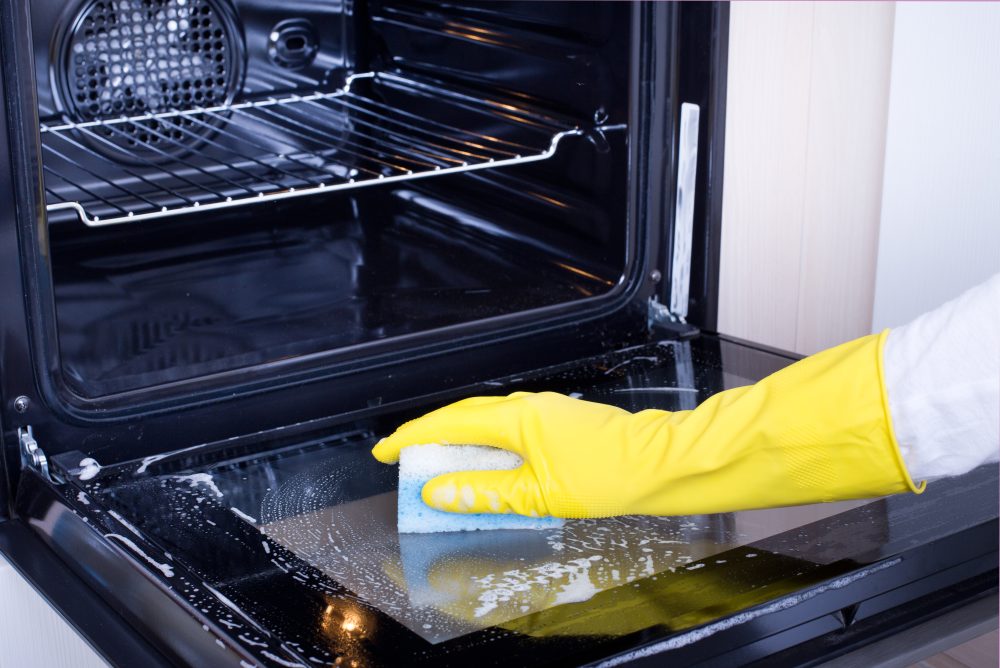
The oven door glass deserves focused attention. Grease and splatter accumulate between the inner and outer panes of glass in many oven models, which is something most people do not realize until they notice their oven looks perpetually dirty no matter how much they clean it. Many oven doors can be partially disassembled to access this space; your appliance manual will guide you through the process safely.
When to Call in the Professionals
Some deep cleaning situations go beyond what a home cleaning routine can address, particularly in households with heavy cooking schedules, older appliances, or spaces that have gone a long time between cleanings. Professional cleaning services bring commercial-grade products, specialized tools, and trained expertise to tackle the kind of buildup that resists DIY efforts.
The Clean Haven offers thorough kitchen appliance deep cleaning as part of our home cleaning services, handled by experienced professionals who understand what it takes to restore your appliances to a genuinely clean condition, not just a surface-level shine.
A clean oven and refrigerator do not just look better. They perform better, last longer, and contribute to a healthier home environment for you and your family. Setting a deep cleaning schedule, twice a year for both appliances at minimum, is one of the simplest and most impactful things you can do for your kitchen. Reach out today to get started with our professional deep cleaning services.